Stack-Level EIS Diagnostics on a Flow Battery Stack

Background

While electrochemical characterization is commonly performed on single cells, real operating conditions of redox flow batteries are defined at the stack level. Once multiple cells are assembled together, additional phenomena appear that cannot be detected during single-cell testing, including contact resistances, compression non-uniformity, flow distribution effects and shunt currents.

To better understand these system-level effects, stack-level Electrochemical Impedance Spectroscopy (EIS) measurements were carried out on a Pinflow battery stack using a multichannel measurement configuration.
The Challenge

During conventional cycling tests, performance degradation often becomes visible only after a significant number of cycles. A decrease in efficiency or power density can be measured, but the underlying cause remains unclear. Possible sources include:

  • poor electrical contacts inside the stack,
  • uneven mechanical compression,
  • electrolyte imbalance between cells,
  • early membrane fouling or electrode degradation.

Standard charge-discharge testing cannot distinguish between these mechanisms.

EIS Diagnostics

Results and Observations

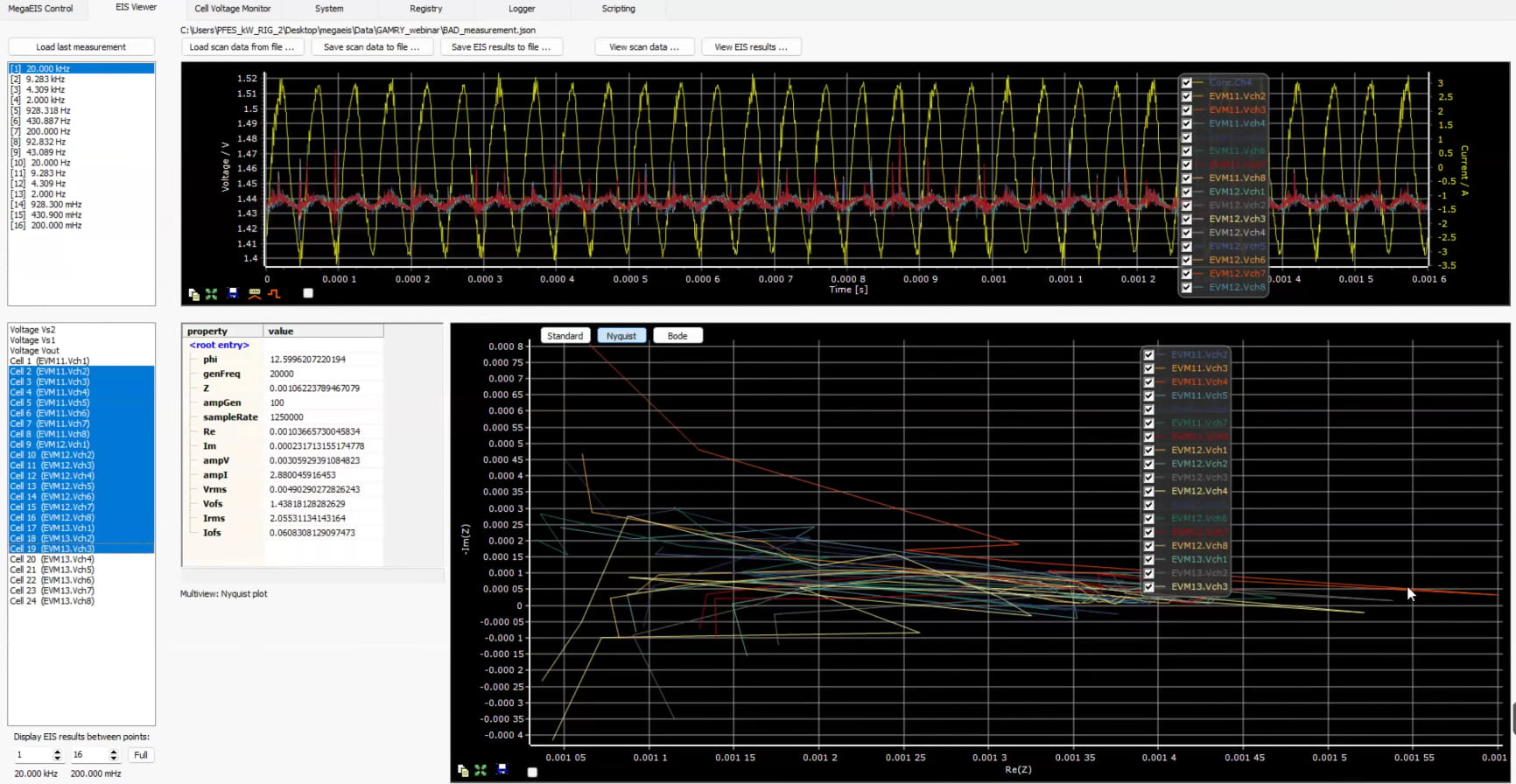
Stack-level EIS enabled early detection of system behaviour that would otherwise only become visible after long-term cycling:

  • identification of increased contact resistance in specific cells,
  • detection of uneven compression across the stack,
  • indication of electrolyte imbalance,
  • monitoring of internal resistance evolution.

Importantly, these issues were observable before measurable capacity fade or efficiency loss occurred.

The Method: Multichannel Stack EIS

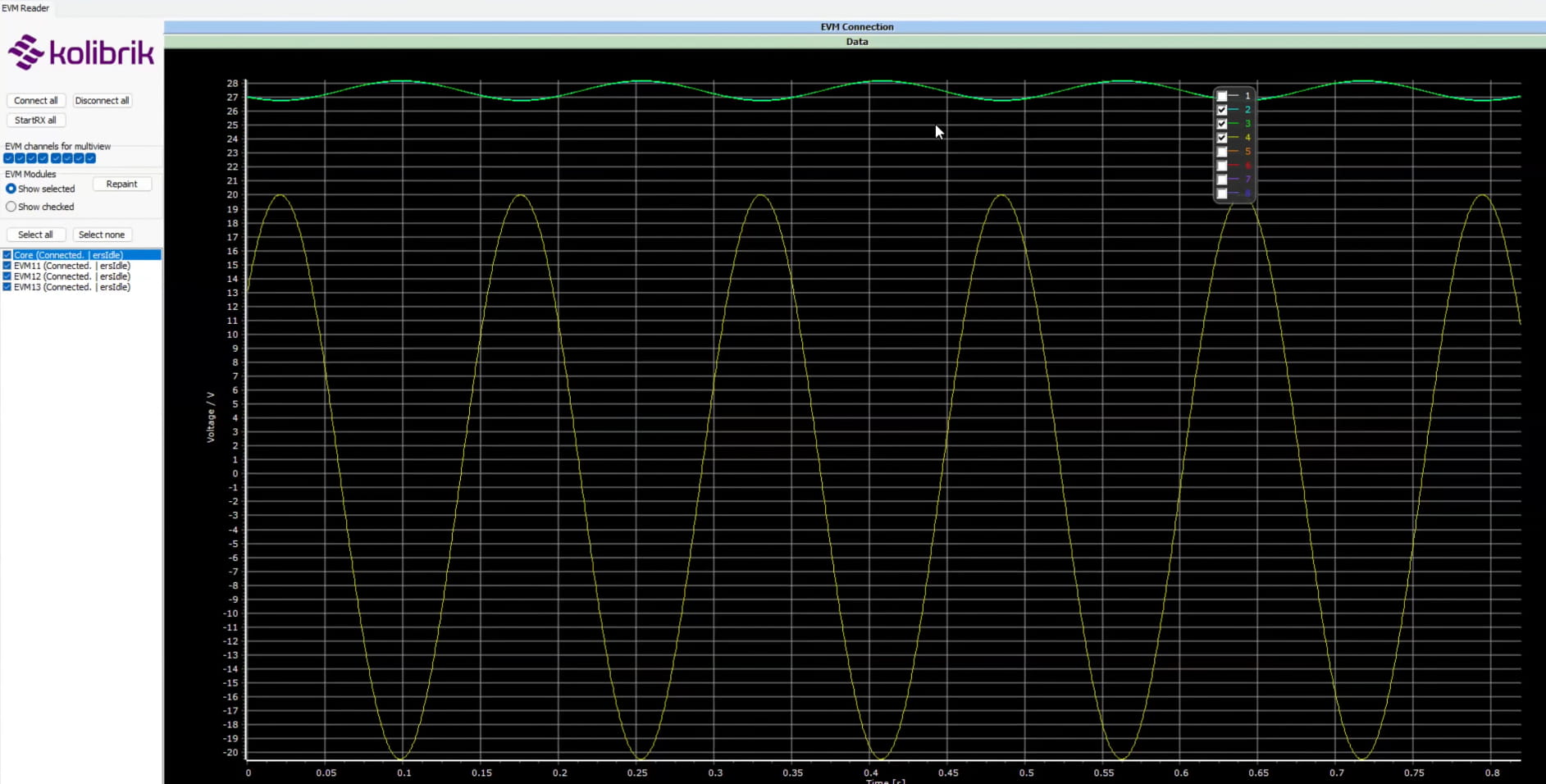
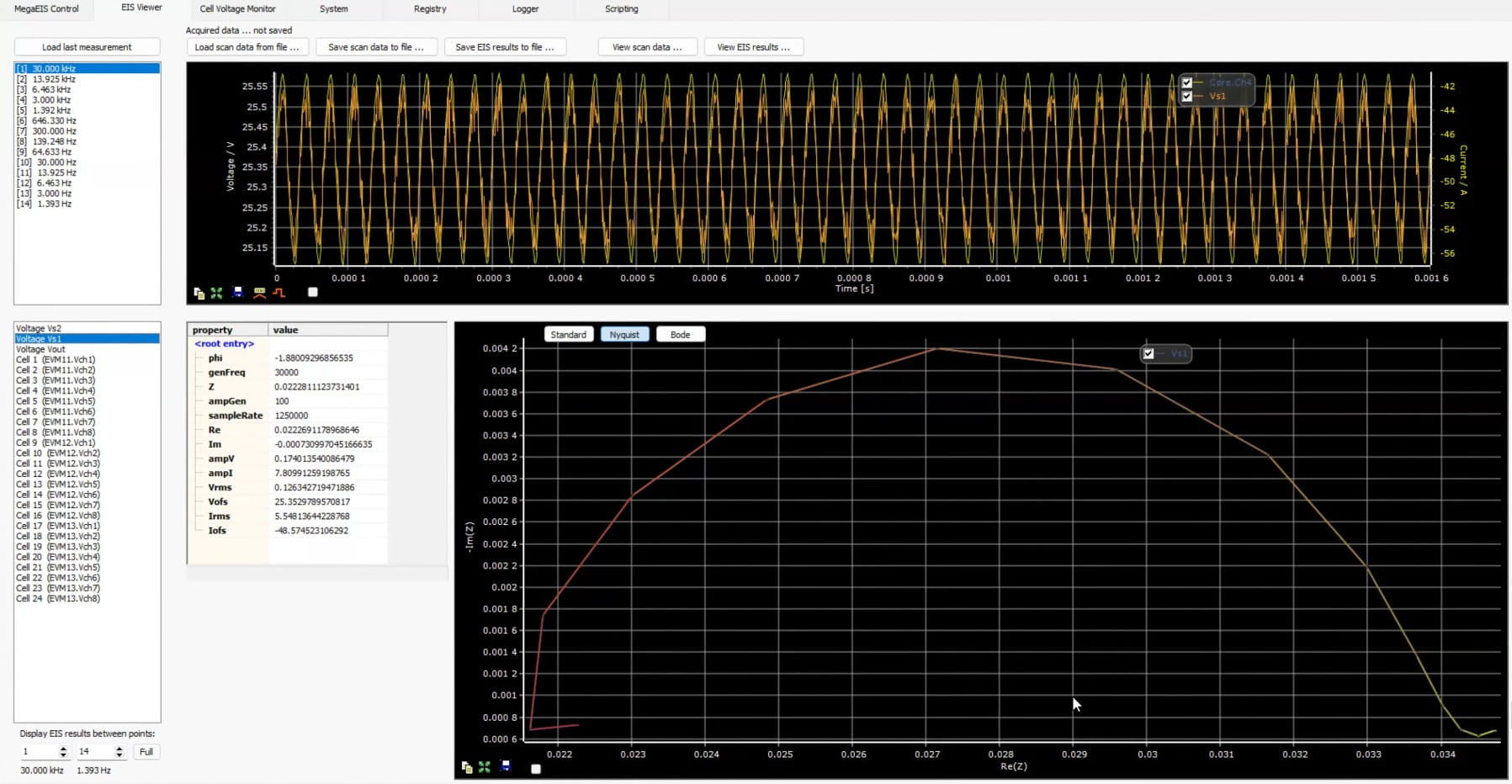
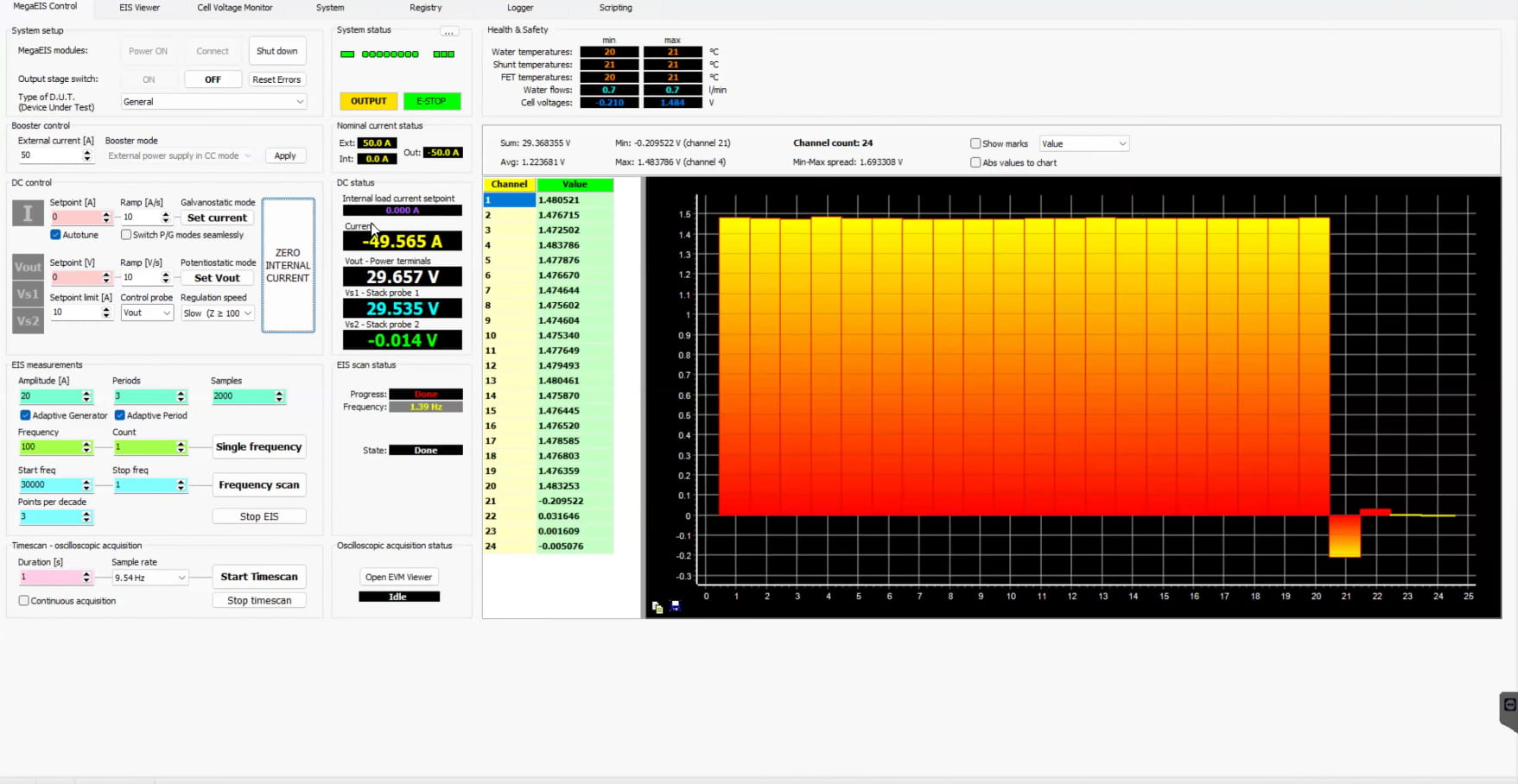
Using multichannel impedance measurement, the response of individual cells inside the assembled stack was analyzed simultaneously. A small AC perturbation signal was applied while the stack remained fully assembled and operational.

This approach allows separation of electrochemical processes from purely electrical or mechanical effects. Instead of measuring the stack as a single component, the impedance of each cell can be evaluated individually.

The measurements were performed directly on a Pinflow flow battery stack integrated into a pilot-scale test setup in collaboration with Kolibrik.

EIS Diagnostics

Why This Matters

In flow battery development, performance problems are often investigated only after they appear in cycling data. At that stage, diagnosing the root cause requires disassembly or long experimental campaigns.

Stack-level EIS changes this workflow. The method provides a non-destructive diagnostic tool capable of identifying problems early, reducing development time and preventing unnecessary redesigns.

Integration into Pinflow Systems

Pinflow pilot and semi-industrial systems are designed to allow advanced diagnostic techniques, including stack-level impedance spectroscopy. The combination of controlled hydraulics, stable electrical connections and compatible power electronics enables reliable impedance measurements on assembled stacks.

This makes it possible not only to operate the system, but also to understand it.

More information about the systems used for this study can be found here: pinflowes.com/products/semi-industrial-systems

A practical demonstration of the measurement method is available in the webinar here: Unique Multichannel EIS Measurement for Battery Packs

EIS Diagnostics
EIS Diagnostics