Long-Lasting Power
Pinflow's Vanadium Flow Batteries Promise Decades of Service Background
Based on the iDNES.cz article: “Naše baterie vydrží desetiletí, slibuje český start-up” (April 2021). Read the original.
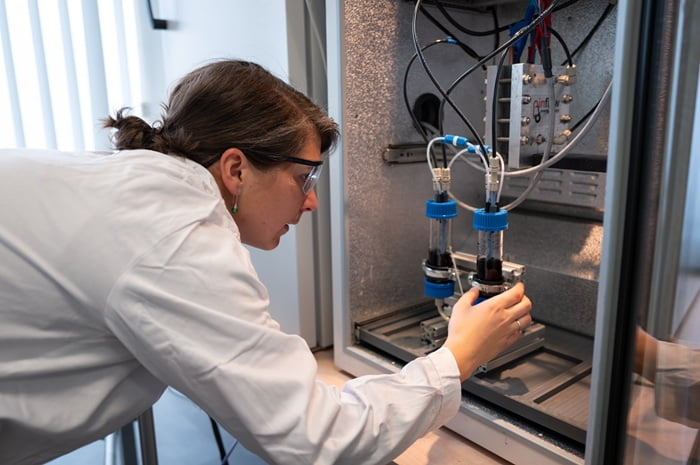
In April 2021, Czech news portal iDNES.cz profiled Pinflow energy storage for its innovative work on vanadium redox flow batteries destined for grid applications. Devices built to charge and discharge repeatedly over many years with minimal degradation.
Built to Last
A Pinflow spokesperson told iDNES:“Our batteries will last for decades.”
These systems are designed to endure hundreds of charge/discharge cycles each day, reliably storing solar or grid energy for long-term use.
How the Tech Works
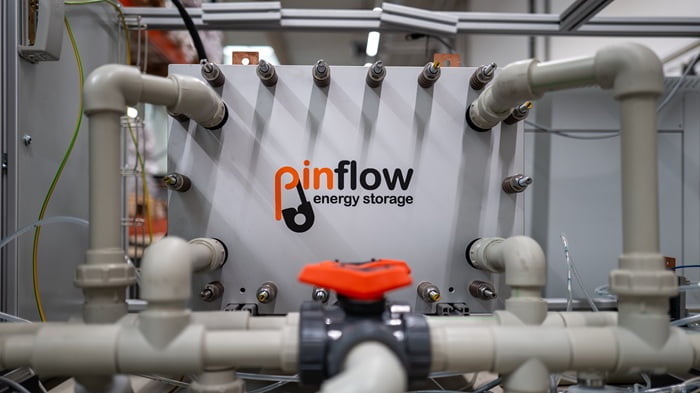
Vanadium redox flow batteries operate using two separate electrolyte tanks, allowing performance (power kW) and storage capacity (kWh) to be scaled independently:
- Storage capacity grows with larger electrolyte tanks.
- Discharge power increases with added electrode surface area.
This modular architecture makes them ideal for everything from small commercial backups to full-scale utility storage solutions.
Why It Matters Today
Pinflow's systems offer several key advantages over traditional lithium-ion batteries:
- Exceptional longevity - Rather than degrading with time, vanadium flow batteries can sustain performance for decades.
- Enhanced safety - Non-flammable electrolytes mitigate fire and explosion risks.
- Cycling resilience - Can endure multiple daily cycles without damage.
- Eco-conscious design - Electrolytes can be completely recycled, lowering long-term environmental impact.
These benefits align with Pinflow's mission of delivering sustainable, resilient energy storage for real-world needs.
From Lab to Industry
What began as a lab experiment at VŠCHT Prague and NTC Pilsen has advanced impressively.
- Successfully piloted installations in industrial settings
- Founder Jiří Vrána describes these batteries as ready for “photovoltaic energy shifting and grid stabilization
- Ongoing plans aim to scale systems from tens of kW to tens of MW, making commercial and utility-scale deployments viable